
Packages (Simulation)
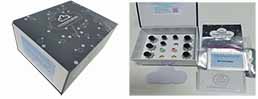
Reagent Preparation
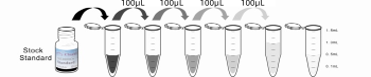
Image (I)
-
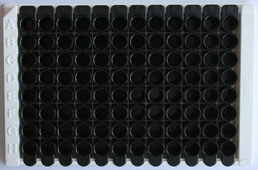 Results demonstration
Image (II)
-
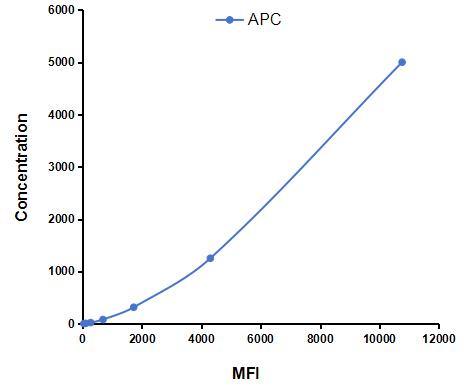 Typical Standard Curve
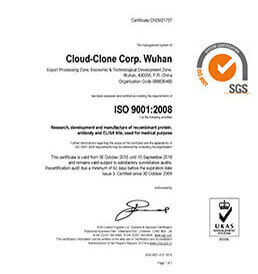
Quality Guarantee

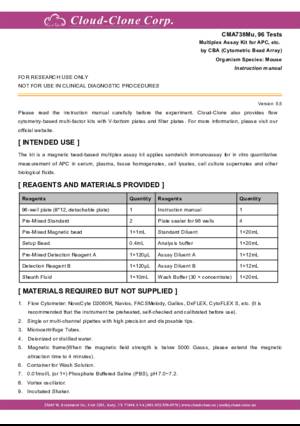
Instruction Manual
Certificate

Multiplex Assay Kit for Activated Protein C (APC) ,etc. by CBA (Cytometric Bead Array)
- Product No.CMA738Mu
- Organism SpeciesMus musculus (Mouse) Same name, Different species.
- Sample TypePlasma
- Test MethodDouble-antibody Sandwich
- Assay Length4h
- Detection Range4.8828-5000pg/mL
- SensitivityThe minimum detectable dose of this kit is typically less than 1.6276pg/mL.
- DownloadInstruction Manual
- UOM 8Plex 7Plex 6Plex 5Plex 4Plex 3Plex 2Plex1Plex
- FOB
US$ 405
US$ 420
US$ 443
US$ 475
US$ 506
US$ 552
US$ 622
US$ 778
For more details, please contact local distributors!
Specificity
This assay has high sensitivity and excellent specificity for detection of Activated Protein C (APC) ,etc. by CBA (Cytometric Bead Array).
No significant cross-reactivity or interference between Activated Protein C (APC) ,etc. by CBA (Cytometric Bead Array) and analogues was observed.
Recovery
Matrices listed below were spiked with certain level of recombinant Activated Protein C (APC) ,etc. by CBA (Cytometric Bead Array) and the recovery rates were calculated by comparing the measured value to the expected amount of Activated Protein C (APC) ,etc. by CBA (Cytometric Bead Array) in samples.
| Matrix | Recovery range (%) | Average(%) |
| serum(n=5) | 78-102 | 87 |
| EDTA plasma(n=5) | 81-92 | 88 |
| heparin plasma(n=5) | 81-101 | 86 |
Precision
Intra-assay Precision (Precision within an assay): 3 samples with low, middle and high level Activated Protein C (APC) ,etc. by CBA (Cytometric Bead Array) were tested 20 times on one plate, respectively.
Inter-assay Precision (Precision between assays): 3 samples with low, middle and high level Activated Protein C (APC) ,etc. by CBA (Cytometric Bead Array) were tested on 3 different plates, 8 replicates in each plate.
CV(%) = SD/meanX100
Intra-Assay: CV<10%
Inter-Assay: CV<12%
Linearity
The linearity of the kit was assayed by testing samples spiked with appropriate concentration of Activated Protein C (APC) ,etc. by CBA (Cytometric Bead Array) and their serial dilutions. The results were demonstrated by the percentage of calculated concentration to the expected.
| Sample | 1:2 | 1:4 | 1:8 | 1:16 |
| serum(n=5) | 99-105% | 86-101% | 86-94% | 86-93% |
| EDTA plasma(n=5) | 91-104% | 87-94% | 78-97% | 96-104% |
| heparin plasma(n=5) | 84-92% | 83-102% | 89-96% | 86-94% |
Stability
The stability of kit is determined by the loss rate of activity. The loss rate of this kit is less than 5% within the expiration date under appropriate storage condition.
To minimize extra influence on the performance, operation procedures and lab conditions, especially room temperature, air humidity, incubator temperature should be strictly controlled. It is also strongly suggested that the whole assay is performed by the same operator from the beginning to the end.
Reagents and materials provided
| Reagents | Quantity | Reagents | Quantity |
Assay procedure summary
1. Add 200μL analysis buffer solution to each well of the plate for pre-wetting;
2. Preparation of standards, reagents and samples before the experiment;
3. Add 100μL standard or sample to each well, add 10μL magnetic beads, and incubate 120 minutes protect from light at 25°C on shaker;
4. Remove liquid on magnetic frame, add 100μL prepared Detection Reagent A. Incubate 60 minutes protect from light at 25°C on shaker;
5. Remove liquid on magnetic frame, add 100μL prepared Detection Reagent B, and incubate 30 minutes protect from light at 25°C on shaker;
6. Wash plate once on magnetic frame;
7. Add 100μL sheath fluid, swirl for 10 minutes, read on the machine.
GIVEAWAYS
INCREMENT SERVICES
| Magazine | Citations |
| The Journal of Immunology | Activated Protein C Attenuates Systemic Lupus Erythematosus and Lupus Nephritis in MRL-Fas(lpr) Mice Jimmunol: 3413 |
| Critical Care | Disseminated intravascular coagulation or acute coagulopathy of trauma shock early after trauma? An observational study BioMed: cc10553 |
| Molecular Endocrinology | Intraovarian Thrombin and Activated Protein C Signaling System Regulates Steroidogenesis during the Periovulatory Period Endo: source |
| Scandinavian Journal of Trauma, Resuscitation and Emergency Medicine | High levels of soluble VEGF receptor 1 early after trauma are associated with shock, sympathoadrenal activation, glycocalyx degradation and inflammation in severely injured patients: a prospective study Sjtrem:1757-7241 |
| Crit Care. | Impact of plasma histones in human sepsis and their contribution to cellular injury and inflammation Pubmed:25260379 |
| Am J Physiol Heart Circ Physiol. | Monocytes regulate systemic coagulation and inflammation in abdominal sepsis Pubmed:25502108 |
| Neuroscience | Protective effects of thrombomodulin on microvascular permeability after subarachnoid hemorrhage in mouse model PubMed: 25936678 |
| Journal of Intensive Care | Activated protein C does not increase in the early phase of trauma with disseminated intravascular coaCavia (Guinea pig )lation: comparison with acute coaCavia (Guinea pig )lopathy of trauma-shock Pubmed:26734467 |
| Journal of Biological Chemistry | Brain microvascular endothelial cells exhibit lower activation of the alternative complement pathway than glomerular microvascular endothelial cells. JBC:Source |
| J Thromb Haemost | A multicenter prospective validation study on disseminated intravascular coagulation in trauma‐induced coagulopathy Pubmed: 32480432 |
| Validation of the Relationship Between Coagulopathy and Localization of Hydroxyethyl Starch on the Vascular Endothelium in a Rat Hemodilution Model 34021192 |
| Catalog No. | Related products for research use of Mus musculus (Mouse) Organism species | Applications (RESEARCH USE ONLY!) |
| PAA738Mu01 | Polyclonal Antibody to Activated Protein C (APC) | WB; IHC; ICC; IP. |
| SEA738Mu | ELISA Kit for Activated Protein C (APC) | Enzyme-linked immunosorbent assay for Antigen Detection. |
| LMA738Mu | Multiplex Assay Kit for Activated Protein C (APC) ,etc. by FLIA (Flow Luminescence Immunoassay) | FLIA Kit for Antigen Detection. |
| CMA738Mu | Multiplex Assay Kit for Activated Protein C (APC) ,etc. by CBA (Cytometric Bead Array) | FLIA Kit for Antigen Detection. |