
Packages (Simulation)
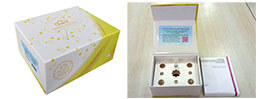
Image (I)
-
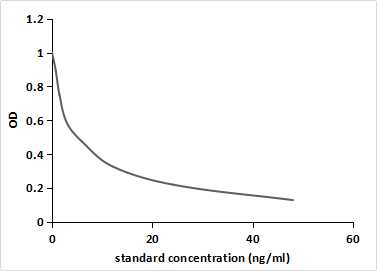 competitive inhibition ELISA;
Coated protein: DHEA conjugated to OVA (Catalog:CPA398Ge21);
Standard:Series Diluted DHEA;
Primary Ab: 0.88µg/ml Mouse Anti DHEA Antibody;
Second Ab: 2µg/mL HRP-Linked Caprine Anti-mouse IgG
PolyclonalAntibody
(Catalog: SAA544Rb19)
IC50=3ng/ml
Quality Guarantee

Instruction Manual
Certificate
Monoclonal Antibody to Dehydroepiandrosterone (DHEA)
- Product No.MAA398Ge28
- Organism SpeciesPan-species (General) Same name, Different species.
- SourceMonoclonal antibody preparation
- HostMouse
- Potency (Clone Number)2-C4
- Ig Isotype IgG2b Lambda
- PurificationProtein A + Protein G affinity chromatography
- LabelNone
- Immunogen CPA398Ge11-BSA Conjugated Dehydroepiandrosterone (DHEA)
- Buffer Formulation0.01M PBS, pH7.4, containing 0.05% Proclin-300, 50% glycerol.
- TraitsLiquid
- Concentration1mg/mL
- Organism Species Moren/a
- ApplicationsELISA, CLIA. / IHC-Fr, ICC, IP (predicted).
If the antibody is used in flow cytometry, please check FCM antibodies. - DownloadInstruction Manual
- UOM 20µl100µl 200µl 1ml 10ml
- FOB
US$ 137
US$ 319
US$ 455
US$ 1138
US$ 4550
For more details, please contact local distributors!
SPECIFITY
The antibody is a mouse monoclonal antibody raised against DHEA. It has been selected for its ability to recognize DHEA in ELISA and CLIA.
USAGE
Immunohistochemistry: 5-20µg/mL;
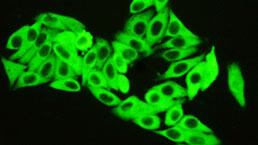
Immunofluorescence:5-20µg/mL;
Optimal working dilutions must be determined by end user.
STORAGE
Store at 4°C for frequent use. Stored at -20°C in a manual defrost freezer for two year without detectable loss of activity. Avoid repeated freeze-thaw cycles.
STABILITY
The thermal stability is described by the loss rate. The loss rate was determined by accelerated thermal degradation test, that is, incubate the protein at 37°C for 48h, and no obvious degradation and precipitation were observed. The loss rate is less than 5% within the expiration date under appropriate storage condition.
GIVEAWAYS
INCREMENT SERVICES
| Magazine | Citations |
| journal of molecular neuroscience | Possible Metabolic Alterations among Autistic Male Children: Clinical and Biochemical Approaches Pubmed: 30600432 |
| Ecotoxicol Environ Safe | A preliminary study on the mechanism of the neurosteroid-mediated ionotropic receptor dysfunction in neurodevelopmental toxicity induced by?¡ 33862428 |
| Bioengineered | MiR-1224-5p attenuates polycystic ovary syndrome through inhibiting NOD-like receptor protein 3 inflammasome activation via targeting Forkhead box O 1 34637688 |