
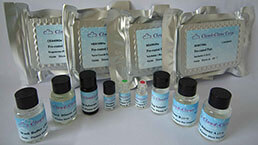
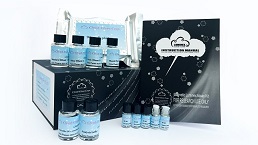
Packages (Simulation)
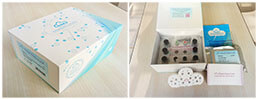
Quality Guarantee

Instruction Manual
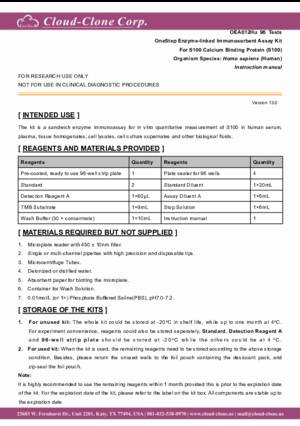
Certificate


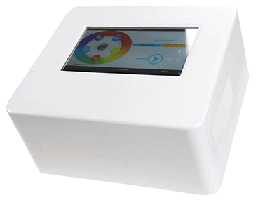
Maybe you can also pay attention to our smart microplate reader
OneStep ELISA Kit for S100 Calcium Binding Protein (S100)
S100-A1; S100A1; S100-Alpha; S-100 Protein; S-100 protein subunit alpha; S-100 protein alpha chain
- Product No.OEA012Hu
- Organism SpeciesHomo sapiens (Human) Same name, Different species.
- Sample Typeserum, plasma, tissue homogenates, cell lysates, cell culture supernates and other biological fluids
- Test MethodDouble-antibody Sandwich
- Assay Length1h10min
- Detection Range3.12-200ng/mL
- SensitivityThe minimum detectable dose of this kit is typically less than 1.31ng/mL.
- DownloadInstruction Manual
- UOM 48T96T
- FOB
US$ 397
US$ 567
For more details, please contact local distributors!
Specificity
This assay has high sensitivity and excellent specificity for detection of S100 Calcium Binding Protein (S100).
No significant cross-reactivity or interference between S100 Calcium Binding Protein (S100) and analogues was observed.
Recovery
Matrices listed below were spiked with certain level of recombinant S100 Calcium Binding Protein (S100) and the recovery rates were calculated by comparing the measured value to the expected amount of S100 Calcium Binding Protein (S100) in samples.
| Matrix | Recovery range (%) | Average(%) |
| serum(n=5) | 87-95 | 91 |
| EDTA plasma(n=5) | 99-105 | 102 |
| heparin plasma(n=5) | 84-101 | 87 |
Precision
Intra-assay Precision (Precision within an assay): 3 samples with low, middle and high level S100 Calcium Binding Protein (S100) were tested 20 times on one plate, respectively.
Inter-assay Precision (Precision between assays): 3 samples with low, middle and high level S100 Calcium Binding Protein (S100) were tested on 3 different plates, 8 replicates in each plate.
CV(%) = SD/meanX100
Intra-Assay: CV<10%
Inter-Assay: CV<12%
Linearity
The linearity of the kit was assayed by testing samples spiked with appropriate concentration of S100 Calcium Binding Protein (S100) and their serial dilutions. The results were demonstrated by the percentage of calculated concentration to the expected.
| Sample | 1:2 | 1:4 | 1:8 | 1:16 |
| serum(n=5) | 82-93% | 91-99% | 87-102% | 81-102% |
| EDTA plasma(n=5) | 78-104% | 99-105% | 83-94% | 78-92% |
| heparin plasma(n=5) | 96-104% | 90-104% | 84-101% | 97-105% |
Stability
The stability of kit is determined by the loss rate of activity. The loss rate of this kit is less than 5% within the expiration date under appropriate storage condition.
To minimize extra influence on the performance, operation procedures and lab conditions, especially room temperature, air humidity, incubator temperature should be strictly controlled. It is also strongly suggested that the whole assay is performed by the same operator from the beginning to the end.
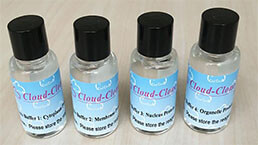
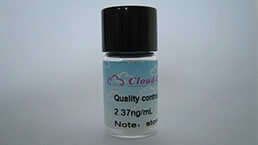
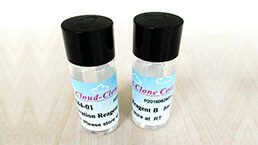
Reagents and materials provided
| Reagents | Quantity | Reagents | Quantity |
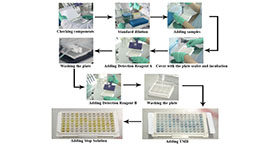
Assay procedure summary
1. Prepare all reagents, samples and standards;
2. Add 50µL standard or sample to each well, then add 50µL prepared Detection Reagent A to each well. Incubate 1 hour at 37°C;
3. Aspirate and wash 3 times;
4. Add 90µL Substrate Solution. Incubate 10-20 minutes at 37°C;
5. Add 50µL Stop Solution. Read at 450nm immediately.
GIVEAWAYS
INCREMENT SERVICES


| Magazine | Citations |
| Brain Research | Vasoactive intestinal peptide protects against ischemic brain damage induced by focal cerebral ischemia in rats ScienceDirect: S0006899311008663 |
| J Exp Neurosci | A New Technique for Collection of Cerebrospinal Fluid in Rat Pups PubMed: 26056488 |
| PLoS One | Regulation of Nutritional Metabolism in Transition Dairy Cows: Energy Homeostasis and Health in Response to Post-Ruminal Choline and Methionine pubmed:27501393 |
| brain research | Ellagic acid exerts protective effect in intrastriatal 6-hydroxydopamine rat model of Parkinson's disease: Possible involvement of ERβ/Nrf2/HO-1 signaling. pubmed:28238669 |
| КиберЛенинка | Levels of neurotropic autoantibodies in patients with schizophrenia article:n |
| Biomed Research International | Epigallocatechin-3-Gallate Reduces Neuronal Apoptosis in Rats after Middle Cerebral Artery Occlusion Injury via PI3K/AKT/eNOS Signaling Pathway Pubmed:29770336 |
| Metabolic Brain Disease | Trigonelline protects hippocampus against intracerebral Aβ (1–40) as a model of Alzheimer's disease in the rat: insights into underlying mechanisms Pubmed: 30421246 |
| ВОЗМОЖНОСТЬ ПРОГНОЗИРОВАНИЯ ОСТРОЙ НЕСПЕЦИФИЧЕСКОЙ БОЛИ В НИЖНЕЙ ЧАСТИ СПИНЫ С ИСПОЛЬЗОВАНИЕМ СЫВОРОТОЧНЫХ … | |
| ВЛИЯНИЕ ХРОНИЧЕСКОГО ВВЕДЕНИЯ НЕЙРОЛЕПТИКОВ НА УРОВНИ НЕЙРОСПЕЦИФИЧЕСКИХ АУТОАНТИТЕЛ В КРОВИ У КРЫС |