
Packages (Simulation)
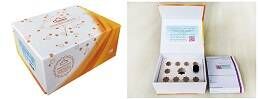
Image (II)
-
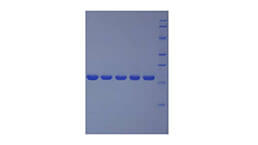
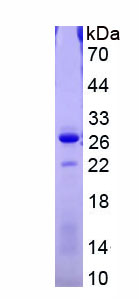 Figure. SDS-PAGE
Quality Guarantee

Instruction Manual
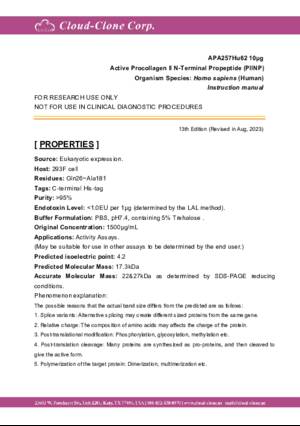
Certificate


Active Procollagen II N-Terminal Propeptide (PIINP)
P2NP; N-Propeptide Of Type II Procollagen; Procollagen II Amino Terminal Propeptide
- Product No.APA257Hu62
- Organism SpeciesHomo sapiens (Human) Same name, Different species.
- Buffer FormulationPBS, pH7.4, containing 5% Trehalose.
- Traits Freeze-dried powder
- Purity> 95%
- Isoelectric Point4.2
- ApplicationsCell culture; Activity Assays.
- DownloadInstruction Manual
- UOM 10µg50µg 200µg 1mg 5mg
- FOB
US$ 360
US$ 900
US$ 1800
US$ 5400
US$ 13500
For more details, please contact local distributors!
ACTIVITY TEST
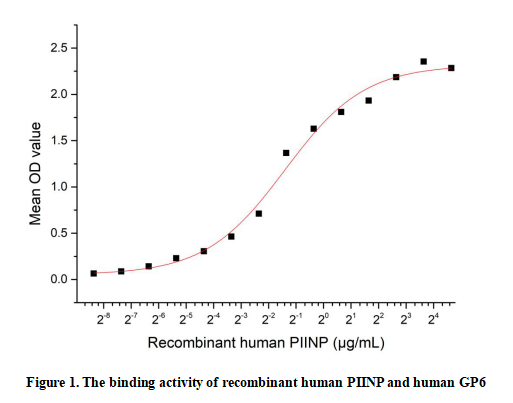
Procollagen II N Terminal Propeptide (PIINP) is a specific proteolytic fragment generated during the biosynthesis of type II collagen, the major structural collagen in hyaline cartilage, intervertebral discs, and the vitreous body of the eye. During chondrocyte-mediated collagen maturation, the N-terminal propeptide is enzymatically cleaved from procollagen II and released into the extracellular matrix and biological fluids. As a direct byproduct of type II collagen synthesis, PIINP serves as a sensitive and specific biomarker for chondrocyte anabolic activity and cartilage formation. It is widely used in research and clinical assessments to evaluate cartilage turnover, monitor disease progression in osteoarthritis and rheumatoid arthritis, and reflect the integrity of cartilage metabolism. GP6, a platelet receptor, can bind to PIINP and mediate cell-matrix adhesion and downstream signaling events. Briefly, GP6 was diluted serially in PBS with 0.01% BSA (pH 7.4). Duplicate samples of 100 μL were then transferred to PIINP-coated microtiter wells and incubated for 1h at 37℃. Wells were washed with PBST and incubated for 1h with anti-GP6 pAb, then aspirated and washed 3 times. After incubation with HRP labelled secondary antibody for 1h at 37℃, wells were aspirated and washed 5 times. With the addition of substrate solution, wells were incubated 15-25 minutes at 37℃. Finally, add 50 µL stop solution to the wells and read at 450/630nm immediately. Measured by its binding ability in a functional ELISA. When recombinant human PIINP is lmmobilized at 2 µg/mL(100 µLwell), the concentration of GP6 that produces 50% optimal bindingresponse is found to be approximately 0.378 µg/mL.
USAGE
Reconstitute in 10mM PBS (pH7.4) to a concentration of 0.1-1.0 mg/mL. Do not vortex.
STORAGE
Avoid repeated freeze/thaw cycles. Store at 2-8°C for one month. Aliquot and store at -80°C for 12 months.
STABILITY
The thermal stability is described by the loss rate. The loss rate was determined by accelerated thermal degradation test, that is, incubate the protein at 37°C for 48h, and no obvious degradation and precipitation were observed. The loss rate is less than 5% within the expiration date under appropriate storage condition.
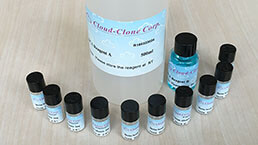
GIVEAWAYS
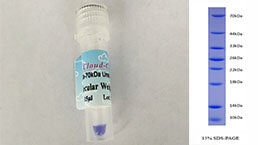
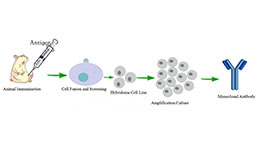
INCREMENT SERVICES

| Magazine | Citations |
| Rheumatology | Added value of biomarkers compared with clinical parameters for the prediction of radiographic spinal progression in axial spondyloarthritis Pubmed: 30830164 |
| Catalog No. | Related products for research use of Homo sapiens (Human) Organism species | Applications (RESEARCH USE ONLY!) |
| APA257Hu61 | Active Procollagen II N-Terminal Propeptide (PIINP) | Cell culture; Activity Assays. |
| EPA257Hu62 | Eukaryotic Procollagen II N-Terminal Propeptide (PIINP) | Positive Control; Immunogen; SDS-PAGE; WB. |
| EPA257Hu61 | Eukaryotic Procollagen II N-Terminal Propeptide (PIINP) | Positive Control; Immunogen; SDS-PAGE; WB. |
| APA257Hu62 | Active Procollagen II N-Terminal Propeptide (PIINP) | Cell culture; Activity Assays. |
| SEA257Hu | ELISA Kit for Procollagen II N-Terminal Propeptide (PIINP) | Enzyme-linked immunosorbent assay for Antigen Detection. |
| CMA257Hu | Multiplex Assay Kit for Procollagen II N-Terminal Propeptide (PIINP) ,etc. by CBA (Cytometric Bead Array) | FLIA Kit for Antigen Detection. |
| LMA257Hu | Multiplex Assay Kit for Procollagen II N-Terminal Propeptide (PIINP) ,etc. by FLIA (Flow Luminescence Immunoassay) | FLIA Kit for Antigen Detection. |