
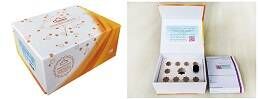
Packages (Simulation)
Quality Guarantee

Certificate
Active Lactoferrin (LTF)
HLF2; LF; GIG12; Lactotransferrin; Growth-inhibiting protein 12; Talalactoferrin; Lfcin-H; Kaliocin-1
- Product No.APA780Bo02
- Organism SpeciesBos taurus; Bovine (Cattle) Same name, Different species.
- Buffer FormulationPBS, pH7.4, containing 0.01% SKL, 5% Trehalose.
- Traits Freeze-dried powder
- Purity> 90%
- Isoelectric Point9.2
- ApplicationsCell culture; Activity Assays.
- Downloadn/a
- UOM 10µg50µg 200µg 1mg 5mg
- FOB
US$ 140
US$ 350
US$ 700
US$ 2100
US$ 5250
For more details, please contact local distributors!
ACTIVITY TEST
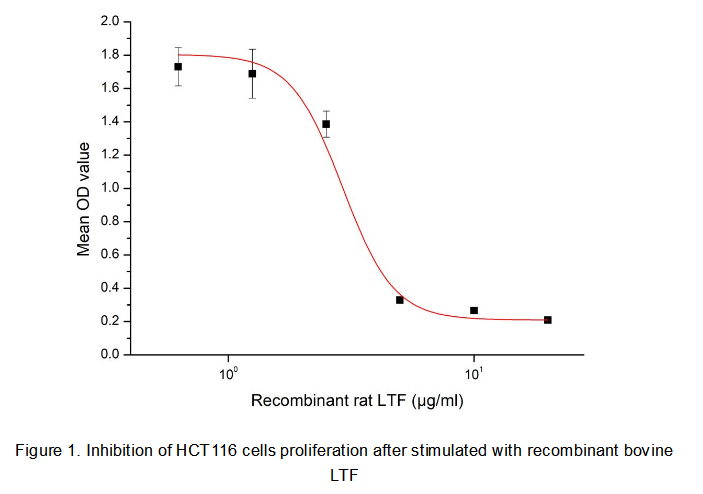
Lactoferrin (LTF), a member of the transferrin family of iron-binding glycoproteins, is a multifunctional protein predominantly secreted by exocrine glands and immune cells. It exerts potent iron-sequestering activity to deprive pathogens of essential iron, mediating broad-spectrum antimicrobial effects. Beyond innate immunity, LTF exhibits robust antiproliferative and proapoptotic properties in malignant cells: it modulates cell cycle checkpoints to arrest proliferation and activates caspase-dependent apoptotic signaling pathways, inducing programmed cell death in cancer cells. Additionally, LTF regulates immune responses and anti-inflammatory processes, making it a promising candidate for anticancer and antimicrobial therapeutic development. To test the effect of LTF on cell apoptosis, HCT116 cells were seeded into triplicate wells of 96-well plates at a density of 4,000 cells/well and allowed to attach overnight, then the medium was replaced with various concentrations of recombinant bovine LTF diluted with 5% serum standard DMEM. After incubated for 72h, cells were observed by inverted microscope and cell proliferation was measured by Cell Counting Kit-8 (CCK-8). Briefly, 10 µl of CCK-8 solution was added to each well of the plate, then the absorbance at 450 nm was measured using a microplate reader after incubating the plate for 1-4 hours at 37 ℃. Cell viability was assessed by CCK-8 (Cell Counting Kit-8 ) assay after incubation with recombinant bovine LTF for 72h. The result was shown in Figure 1. It was obvious that LTF significantly decreased cell viability of HCT116 cells. The ED50 of recombinant bovine LTF is 2.91 μg/ml.
USAGE
Reconstitute in 10mM PBS (pH7.4) to a concentration of 0.1-1.0 mg/mL. Do not vortex.
STORAGE
Avoid repeated freeze/thaw cycles. Store at 2-8°C for one month. Aliquot and store at -80°C for 12 months.
STABILITY
The thermal stability is described by the loss rate. The loss rate was determined by accelerated thermal degradation test, that is, incubate the protein at 37°C for 48h, and no obvious degradation and precipitation were observed. The loss rate is less than 5% within the expiration date under appropriate storage condition.
GIVEAWAYS
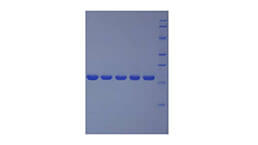
INCREMENT SERVICES
-
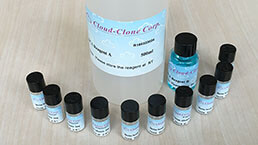 BCA Protein Quantification Kit
-
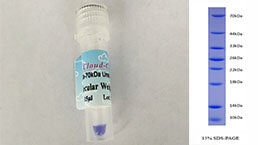 Molecular Mass Marker for Protein
-
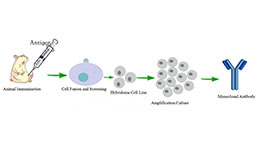 Monoclonal Antibody Customized Service
-
 Polyclonal Antibody Customized Service
-
 Protein Activity Test Experiment Service
-
 Electrophoretic Mobility Shift Assay (EMSA) Experiment Service
-
 Buffer
-
 Lentivirus Packaging Experiment Service
-
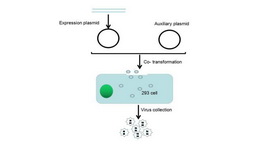 Adenovirus Packaging Experiment Service
-
 Real Time PCR Experimental Service
-
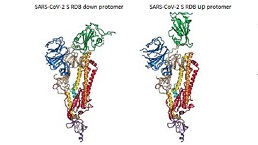 Spike RBD Protein (S-RBD)
-
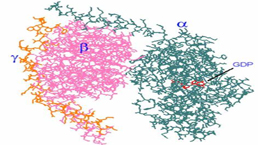 Protein G
-
 Protein A
| Magazine | Citations |
| The International Journal of Biochemistry & Cell Biology | Changes of hepatic lactoferrin gene expression in two mouse models of the acute phase reaction ScienceDirect: S1357272511002524 |
| BMC Veterinary Research | Changes in composition of colostrum of Egyptian buffaloes and Holstein cows BioMed: 17466148 |
| Plos One | p38MAPK, ERK and PI3K Signaling Pathways Are Involved in C5a-Primed Neutrophils for ANCA-Mediated Activation PlosOne: source |
| The Journal of Biological Chemistry | Sphingolipid Pathway Regulates Innate Immune Responses at the Fetomaternal Interface during Pregnancy Pubmed:25505239 |
| PLoS One | Control of Methicillin-Resistant Staphylococcus aureus Pneumonia Utilizing TLR2 Agonist Pam3CSK4 Pubmed:26974438 |
| Bioscience, Biotechnology, and Biochemistry | Salivary lactoferrin is transferred into the brain via the sublingual route pubmed:28351211 |
| Pulmonary Pharmacology & Therapeutics | Effects of fluticasone propionate and budesonide on the expression of immune defense genes in bronchial epithelial cells Pubmed:29627483 |
| Microbial Pathogenesis | TLR2 agonist Pam3CSK4 enhances the antibacterial functions of GM-CSF induced neutrophils to methicillin-resistant Staphylococcus aureus |
| Assessment of the Diagnostic Value of IL-10 and Lactoferrin by BIRADS Categories in Breast Neoplasms | |
| J Clin Med | A Three-Protein Panel to Support the Diagnosis of Sepsis in Children Pubmed:35329889 |
| Food Funct | Three Urban of China: A Cohort Study of Maternal-Infant Factors and HM Protein Components Pubmed:35438093 |
| Biomedicines | Myeloid-Specific Pyruvate-Kinase-Type-M2-Deficient Mice Are Resistant to Acute Lung Injury Pubmed:35625931 |
| Catalog No. | Related products for research use of Bos taurus; Bovine (Cattle) Organism species | Applications (RESEARCH USE ONLY!) |
| NPA780Bo01 | Native Lactoferrin (LTF) | Positive Control; Immunogen; SDS-PAGE; WB. |
| RPA780Bo01 | Recombinant Lactoferrin (LTF) | Positive Control; Immunogen; SDS-PAGE; WB. |
| APA780Bo02 | Active Lactoferrin (LTF) | Cell culture; Activity Assays. |
| APA780Bo01 | Active Lactoferrin (LTF) | Cell culture; Activity Assays. |
| PAA780Bo05 | Polyclonal Antibody to Lactoferrin (LTF) | WB |
| PAA780Bo01 | Polyclonal Antibody to Lactoferrin (LTF) | WB,ICC/IF |
| MAA780Bo21 | Monoclonal Antibody to Lactoferrin (LTF) | WB; IHC; ICC; IP. |
| SEA780Bo | ELISA Kit for Lactoferrin (LTF) | Enzyme-linked immunosorbent assay for Antigen Detection. |
| OEA780Bo | OneStep ELISA Kit for Lactoferrin (LTF) | Enzyme-linked immunosorbent assay for Antigen Detection. |
| SCA780Bo | CLIA Kit for Lactoferrin (LTF) | Chemiluminescent immunoassay for Antigen Detection. |
| LMA780Bo | Multiplex Assay Kit for Lactoferrin (LTF) ,etc. by FLIA (Flow Luminescence Immunoassay) | FLIA Kit for Antigen Detection. |
| CMA780Bo | Multiplex Assay Kit for Lactoferrin (LTF) ,etc. by CBA (Cytometric Bead Array) | FLIA Kit for Antigen Detection. |
| KSA780Bo01 | ELISA Kit DIY Materials for Lactoferrin (LTF) | Main materials for "Do It (ELISA Kit) Yourself". |