
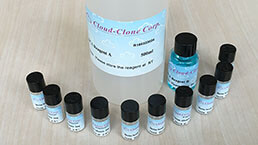
Packages (Simulation)
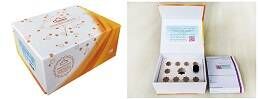
Image (II)
-
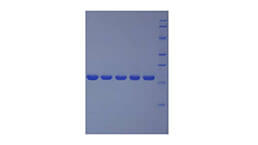
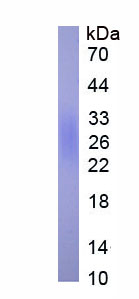 Figure. SDS-PAGE
Quality Guarantee

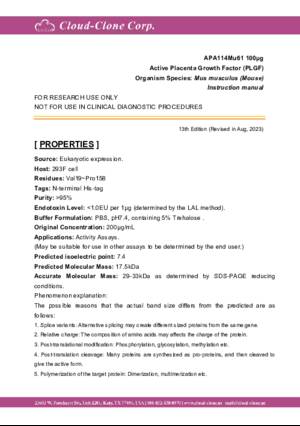
Instruction Manual
Certificate
Active Placenta Growth Factor (PLGF)
PlGF2; PGF; PGFL; Placental Growth Factor-Like; Vascular Endothelial Growth Factor-Related Protein
- Product No.APA114Mu61
- Organism SpeciesMus musculus (Mouse) Same name, Different species.
- Buffer FormulationPBS, pH7.4, containing 5% Trehalose.
- Traits Freeze-dried powder
- Purity> 95%
- Isoelectric Point7.4
- ApplicationsCell culture; Activity Assays.
- DownloadInstruction Manual
- UOM 10µg50µg 200µg 1mg 5mg
- FOB
US$ 200
US$ 500
US$ 1000
US$ 3000
US$ 7500
For more details, please contact local distributors!
ACTIVITY TEST
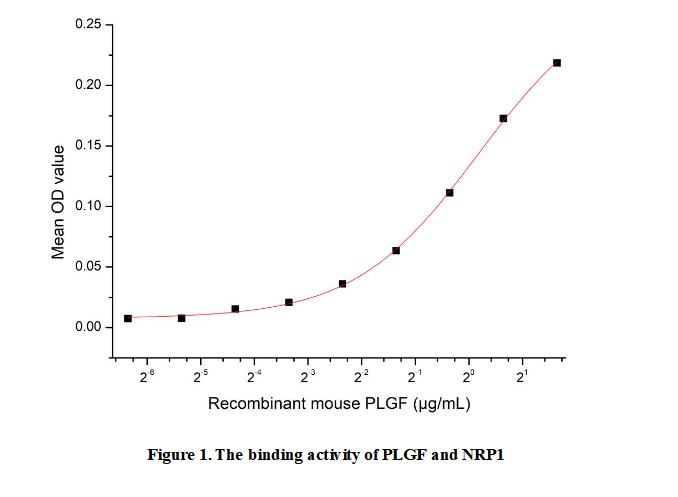
A114Mu is a research-grade monoclonal antibody specifically targeting Placenta Growth Factor (PLGF). Monoclonal antibodies like A114Mu are laboratory-engineered proteins designed to bind to a single, precise epitope on their target molecule—here, PLGF. Its development stems from the need to study PLGF’s biological roles, particularly in angiogenesis (blood vessel formation) and pathological conditions such as cancer and preeclampsia. A114Mu enables researchers to block PLGF activity in vitro and in vivo, helping elucidate its interactions with receptors like VEGFR-1. This tool is critical for validating PLGF as a therapeutic target, as its inhibition may suppress abnormal blood vessel growth in tumors or regulate placental vascular development in pregnancy-related disorders.To detect the activity of recombinant PLGF, a functional ELISA assay was performed to evaluate the interaction between recombinant human PLGF and recombinant human NRP1.Briefly, biotin-linked PLGF were diluted serially in PBS, with 0.01% BSA (pH 7.4). Duplicate samples of 100µl were then transferred to NRP1-coated microtiter wells and incubated for 1h at 37℃. Wells were washed with PBST 3 times and incubation with Streptavidin-HRP for 30min, then wells were aspirated and washed 5 times. With the addition of substrate solution, wells were incubated 15-25 minutes at 37℃. Finally, add 50µl stop solution to the wells and read at 450nm immediately. The binding activity of PLGF and NRP1 was shown in Figure 1, the EC50 for this effect is 1.12355µg/mL.
USAGE
Reconstitute in 10mM PBS (pH7.4) to a concentration of 0.1-1.0 mg/mL. Do not vortex.
STORAGE
Avoid repeated freeze/thaw cycles. Store at 2-8°C for one month. Aliquot and store at -80°C for 12 months.
STABILITY
The thermal stability is described by the loss rate. The loss rate was determined by accelerated thermal degradation test, that is, incubate the protein at 37°C for 48h, and no obvious degradation and precipitation were observed. The loss rate is less than 5% within the expiration date under appropriate storage condition.
GIVEAWAYS
INCREMENT SERVICES
-
 BCA Protein Quantification Kit
-
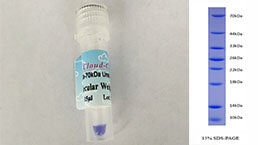 Molecular Mass Marker for Protein
-
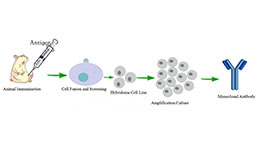 Monoclonal Antibody Customized Service
-
 Polyclonal Antibody Customized Service
-
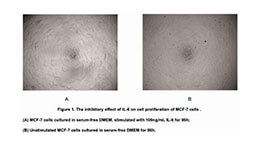 Protein Activity Test Experiment Service
-
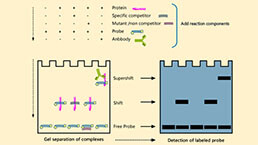 Electrophoretic Mobility Shift Assay (EMSA) Experiment Service
-
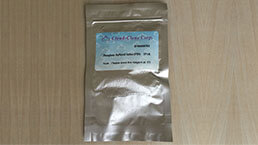 Buffer
-
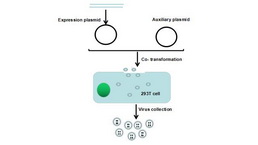 Lentivirus Packaging Experiment Service
-
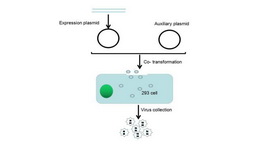 Adenovirus Packaging Experiment Service
-
 Real Time PCR Experimental Service
-
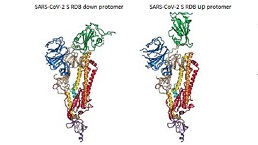 Spike RBD Protein (S-RBD)
-
 Protein G
-
 Protein A
| Magazine | Citations |
| Microvascular Research | Mutant hypoxia inducible factor-1α improves angiogenesis and tissue perfusion in ischemic rabbit skeletal muscle PubMed: 20937289 |
| Oncogene | Elevated PLGF contributes to small-cell lung cancer brain metastasis PubMed: 22797069 |
| ?eLife | Photoreceptor avascular privilege is shielded by soluble VEGF receptor-1 PubMed: PMC3687373 |
| International Journal of Nanomedicine | Sustained dual release of placental growth factor-2 and bone morphogenic protein-2 from heparin-based nanocomplexes for direct osteogenesis Pubmed:27042064 |
| The Journal of Maternal-Fetal & Neonatal Medicine | Serum angiogenic profile in abnormal placentation Pubmed:26863111 |
| Fertility and Sterility | Administration of atosiban in patients with endometriosis undergoing frozenâthawed embryo transfer: a prospective, randomized study Pubmed:27143518 |
| Basic & Clinical Pharmacology & Toxicology | Placental Growth Factor Triggers Epithelial-to-Mesenchymal Transition-like Changes in Rat Type II Alveolar Epithelial Cells: Activation of Nuclear Factor κB Signalling Pathway doi:10.1111 |
| Life Sci. | Placenta growth factor contributes to cell apoptosis and epithelial-to-mesenchymal transition in the hyperoxia-induced acute lung injury Pubmed:27211521 |
| Int Immunopharmacol | Knockdown of placental growth factor (PLGF) mitigates hyperoxia-induced acute lung injury in neonatal rats: Suppressive effects on NFκB signaling pathway Pubmed:27280587 |
| Journal of Maternal-Fetal & Neonatal Medicine | Relationship between elevated serum level of placental growth factor and status of gestational diabetes mellitus Pubmed: 30935303 |
| Children (Basel) | sFlt-1/PlGF Ratio in Prediction of Short-Term Neonatal Outcome of Small for Gestational Age Neonates 34438609 |
| Dose-Response: An International Journal | Puerarin Reduces Radiation-Induced Vascular Endothelial Cell Damage Via miR-34a/Placental Growth Factor Pubmed:35110976 |